In heavy-duty industrial applications, selecting the correct flexible coupling is essential not only for transmitting torque from a motor to a driven machine but also for accommodating unavoidable shaft misalignment, absorbing shock loads, and dampening torsional vibrations.
Specifying the wrong coupling type can lead to premature bearing failure, excessive vibration, catastrophic coupling breakage, and costly unplanned downtime.
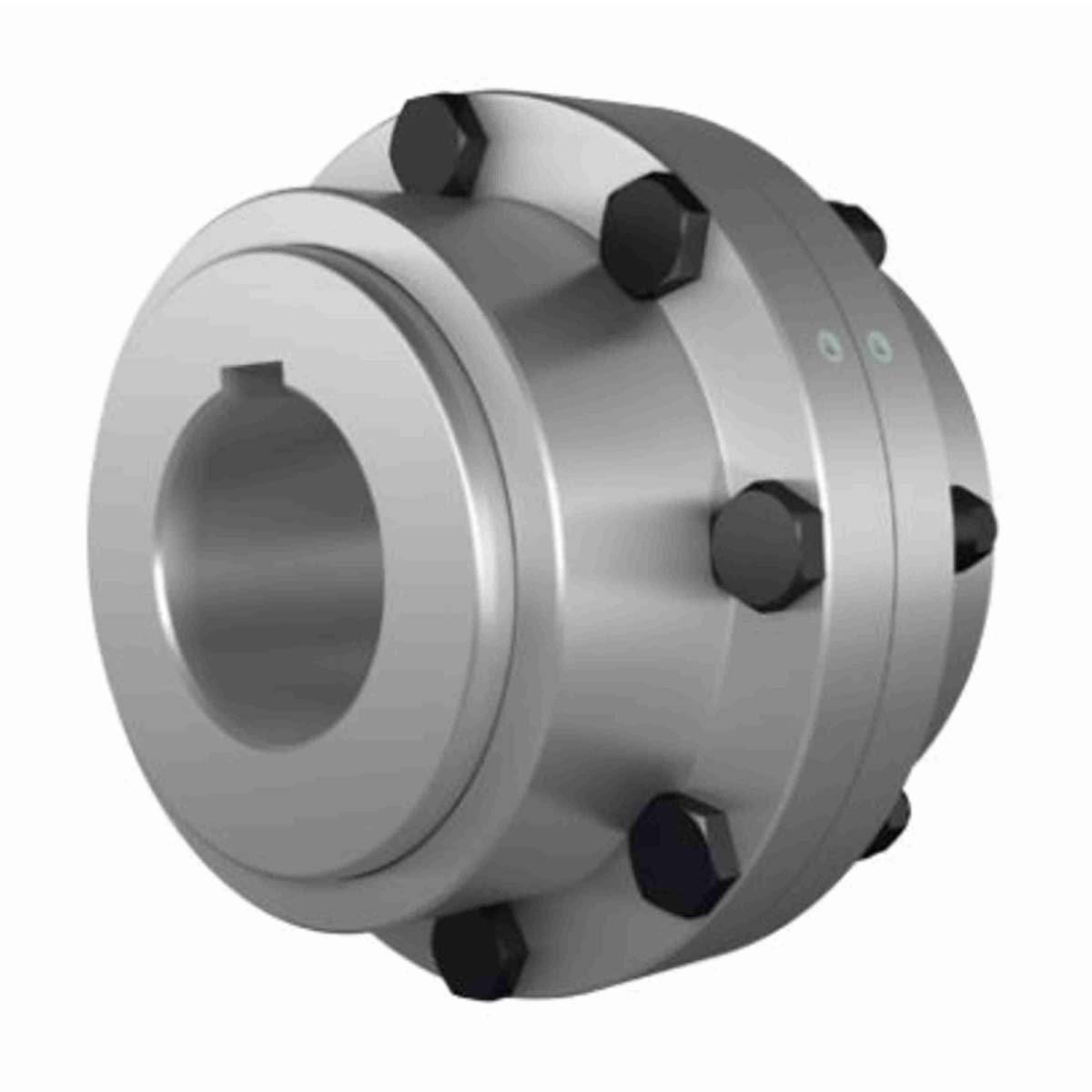
When designing or maintaining industrial drives, engineers and maintenance teams most frequently evaluate three common types of flexible couplings: the Pin Bush Coupling, the Jaw Coupling, and the Tyre Coupling.
How Do Pin Bush, Jaw, and Tyre Couplings Differ in Flexibility and Torque Handling?
Pin Bush, Jaw, and Tyre couplings differ significantly in their fundamental design, torque density, torsional stiffness, and their ability to handle misalignment and shock. These differences dictate which applications each coupling is best suited for.
-
Pin Bush Coupling: A robust, semi-flexible coupling that uses steel pins transmitting torque through rubber or leather bushes. It offers moderate torsional flexibility and is excellent at handling moderate shock loads, but has limited capacity for parallel and angular misalignment.
-
Jaw Coupling: A highly flexible, fail-safe coupling typically comprising two metal hubs with intermeshing jaws and a central elastomeric "spider" or "cushion." It provides high torsional compliance, dampens vibration effectively, and accommodates moderate angular misalignment, but has lower torque capacity compared to pin bush types of the same size.
-
Tyre Coupling: A tyre-shaped (toroidal) flexible element, reinforced with cord, that is clamped between two hubs. It offers exceptional flexibility in all directions—angular, parallel, and axial—and is superior at absorbing heavy shock loads and torsional vibrations, often acting as a mechanical "fuse" to protect the drive system.
When Is a Pin Bush Coupling Ideal for Pumps, Compressors, and Continuous Industrial Drives?
The Pin Bush Coupling is ideal for heavy-duty, continuous-running industrial drives—such as centrifugal pumps, compressors, fans, blowers, and conveyors—where the primary requirement is reliable torque transmission and moderate shock absorption, and where alignment can be maintained within reasonable limits.
-
Robust Design & Reliability: Its all-metal hub and pin construction provides high strength and durability for 24/7 operation in demanding environments like steel plants, cement mills, and power generation facilities.
-
Ease of Maintenance: The rubber or leather bushes are readily replaceable in situ without moving the connected equipment, simplifying maintenance routines.
-
Fail-Safe Operation: Even if the rubber bushes completely fail, the metal pins will often continue to drive the equipment, preventing a total process stoppage (though this is not recommended practice).
-
Cost-Effective for Large Sizes: For larger, higher-torque applications where high flexibility is not the primary concern, pin bush couplings often provide a more economical solution than large jaw or tyre couplings.
When Should You Choose a Jaw or Tyre Coupling for Shock Damping or Misalignment?
You should choose a Jaw Coupling for applications requiring vibration damping and moderate misalignment, and a Tyre Coupling whenever your primary concern is severe shock loads, high torque fluctuations, or significant shaft misalignment.
Choose a Jaw Coupling When:
-
Vibration Dampening is Critical: The elastomeric spider effectively isolates torsional vibrations, protecting sensitive equipment like encoders, tachometers, and precision drives.
-
Moderate Misalignment Exists: It handles angular misalignment well (up to 1 degree) and some parallel misalignment, making it suitable for general-purpose drives where precise shaft alignment is challenging.
-
Low Torque & High Speed: It operates well in smaller, higher-speed applications like printing machinery, packaging equipment, and some servo drives (depending on the spider material).
-
Fail-Safe (with Spider): If the spider fails, the jaws interlock, providing a temporary metal-to-metal drive.
Choose a Tyre Coupling When:
-
Severe Shock Loads & Torque Spikes: Its unique flexible tyre element "winds up" under load, absorbing impact energy and protecting motors and gearboxes in applications like crushers, mills, mixers, and reciprocating pumps.
-
Substantial Misalignment: It accommodates very high levels of misalignment in all planes—up to 4 degrees angular, 6mm parallel, and significant axial end-float—making it perfect for applications with thermal expansion, flexible bases, or floating shafts.
-
No Lubrication & Easy Installation: The tyre element requires no lubrication and can be easily replaced by simply removing the clamping rings, without disturbing the hubs or connected machinery.
-
Electrical Isolation: The non-conductive rubber tyre prevents the passage of stray electrical currents between the motor and driven equipment.
What Operating Parameters Should You Check Before Selecting a Flexible Coupling?
Before finalising your selection, you must calculate or verify several critical operating parameters to ensure the coupling is sized correctly and will perform reliably in your specific application:
-
Required Torque: Calculate the nominal torque based on the driver power and RPM (T = 9550 * kW / RPM). Then, apply a service factor (based on the type of driver and driven machine, load characteristics, and daily operating hours) to determine the required coupling torque rating.
-
Maximum RPM: Ensure the coupling's rated maximum speed exceeds the operating speed of your drive system.
-
Shaft Diameters: Verify that the coupling hubs can accommodate the required bore sizes and keyways of both the driving and driven shafts.
-
Misalignment Levels: Quantify the expected angular, parallel, and axial misalignment between the two shafts and select a coupling (Jaw or Tyre) that meets or exceeds these values.
-
Environmental Conditions: Consider temperature, presence of oil, chemicals, dust, or moisture, and select a coupling material (e.g., standard rubber vs. nitrile or neoprene for oil resistance) that can withstand these conditions.
-
Space Constraints: Confirm that the coupling's physical dimensions (outside diameter and length) fit within the available space on the machinery.
How Can Anant Engineering Support Your Industrial Coupling and Drivetrain Requirements?
Anant Engineering Private Limited (+91-702-141-8176, info@anantengineering.com, Vasai (E), Mumbai) manufactures and supplies a comprehensive range of power transmission components, including precision-engineered Industrial Couplings` such as Pin Bush Couplings, Jaw Couplings, and Tyre Couplings, alongside industrial gears, sprockets, and gearboxes from our Mumbai facility for clients across India and worldwide.
Whether you need a standard coupling from our ready stock for a pump drive, or a custom-engineered solution for a heavy-duty crusher, our engineering team is ready to assist. Explore our full product catalogue on our Products page.

 Industrial Couplings
 Industrial Gears
 Sprocket
 Industrial Roller Chain
 Pulleys
 Plummer Block
 Gearbox